
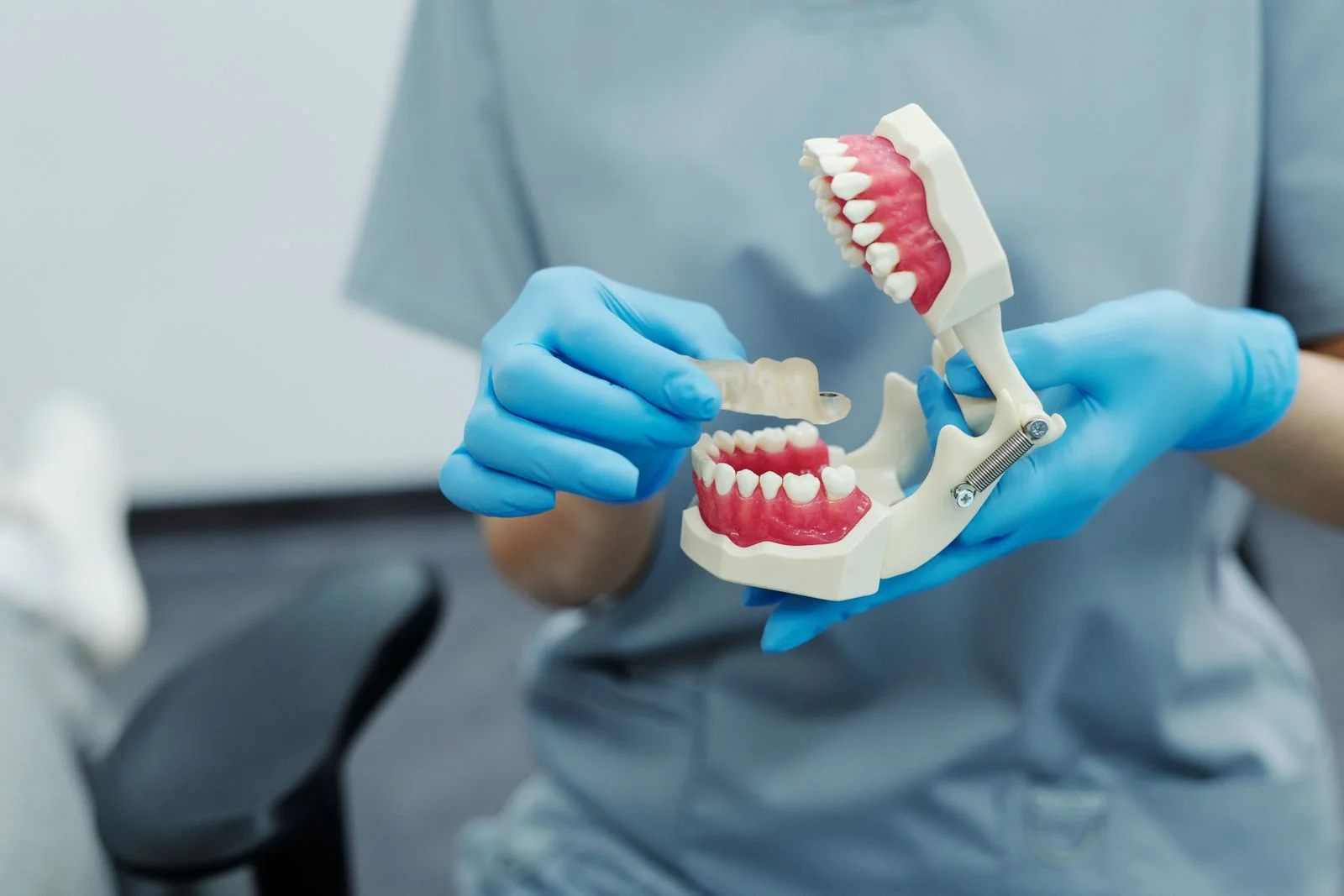
Stock photograph for illustration; not a participating clinic, practitioner or treatment result. Photo: Cedric Fauntleroy / Pexels.
Multiple tooth implants in Adelaide refers to replacing several missing teeth using implant-based approaches — which may involve individual implants, implant-supported bridges, or implant-retained dentures, depending on individual assessment. The number of implants placed does not necessarily equal the number of teeth being replaced. Only a registered dental practitioner examining your specific situation can determine which arrangement, if any, is suitable for you.
What multiple tooth implants can involve
When several teeth are missing, there is more than one way an implant-based plan might address those gaps. Healthdirect explains that once a dental implant — a metal screw placed into the jawbone — is in position, it can support a crown, a dental bridge, or a denture. A dental bridge, as healthdirect describes it, consists of multiple crowns attached to each other, meaning a smaller number of implants may support a restoration covering more than one gap.
The Australian Dental Association describes a conventional bridge using crowns on neighbouring teeth with a replacement tooth between them. Separately, Healthdirect explains that a dental implant can support a bridge. Ask the practitioner which supporting arrangement their proposal describes. A partial denture is another option for replacing one or more missing teeth, and an implant-retained denture — where implants hold a removable denture in place — is a further arrangement that a practitioner may discuss.
In practical terms, this means a person with four missing teeth spread across the mouth might be presented with a different plan than someone with four adjacent missing teeth. Whether any of these arrangements suits your jaw, bone structure, and overall oral health is a question for your assessing practitioner, not for general reading.
How a multiple-tooth enquiry differs from single-tooth or full-arch
A single tooth implant enquiry generally concerns one gap and one restoration. A full-arch enquiry concerns replacing an entire upper or lower row. A multiple-tooth enquiry sits between those two: several gaps, potentially in different positions, possibly addressed by a mix of individual implants and bridgework, possibly involving more than one treatment stage or more than one practitioner type.
Ask the practitioner how the different gaps would be assessed, what records they consider appropriate and how any proposed components would fit together. Do not assume that a multiple-tooth request follows the same plan as a single-tooth request. The practitioner must explain the individual assessment and the reasons for a proposed approach.
Hypothetical scenario: thinking through the variables
The following is a hypothetical illustration, not a real patient account.
Imagine someone with three missing teeth — two adjacent at the back of the lower jaw, one at the front of the upper jaw. A practitioner might discuss whether the two adjacent lower gaps could be addressed with fewer implants supporting a bridge, while the upper front gap might be treated separately with an individual implant and crown. That would be a different plan — different number of implants, different stages, potentially different costs — than simply placing one implant per missing tooth. Understanding that possibility before the appointment means you can ask the right questions rather than reacting to unfamiliar terminology on the day.
What to bring to your assessment
The consultation-preparation guide for multiple tooth implant consultations covers question lists in detail. For the assessment itself, the practical priorities are:
- Know your gaps: Be ready to describe which teeth are missing and roughly how long they have been absent.
- Know your general health: Some conditions can affect the jawbone or healing. Your practitioner will ask; having a summary ready saves time.
- Know what you want to understand: Whether the plan involves stages, which professional performs each stage, what the restoration looks like, and what ongoing care involves.
- Request written information: Healthdirect advises making sure you know all the costs of your treatment before you start, and that your dental professional can explain the costs and give you a quotation. Ask for scope and fees in writing, distinguishing what is confirmed from what depends on further findings.
For broader guidance on understanding a written quotation, see the dental implant cost and written quote questions guide.
What this enquiry service does
This website is an independent enquiry service operated by JR Digital Services Pty Ltd. It is not a dental practice and does not provide dental assessments, treatment plans, or quotations. When you submit an enquiry, your contact details and general request are collected so they can be considered for follow-up or referral where available. Submitting an enquiry does not book an appointment, guarantee a provider match, or commit you to any treatment.
Any practitioner who follows up should identify themselves and explain their role before you decide whether to proceed. The receiving practice sets its own fees, consent processes, and appointment conditions — confirm these directly before booking.
Please do not send clinical photographs, scans, or medical histories through this form. Ask the practice how it prefers to receive that information privately.
Checking practitioner registration
Dental practitioners in Australia — including dentists, dental therapists, dental hygienists, dental prosthetists, and oral health therapists — are registered through the Dental Board of Australia and listed on the Ahpra public register. You can search the register at ahpra.gov.au before or after a referral to confirm that the practitioner is currently registered.
Common questions about this page
Does the number of implants equal the number of missing teeth? Not necessarily. As the sources above explain, one implant may support a bridge that replaces more than one tooth. The arrangement depends on individual assessment.
Can this service tell me whether I am suitable for implants? No. Suitability requires clinical assessment by a registered dental practitioner. This page provides general sourced education and enquiry preparation.
Does sending an enquiry book treatment? No. The receiving practice must confirm all appointment details, fees, and consent steps independently.
Further reading
- Dental implant procedure — healthdirect
- Crowns, bridges and veneers — Australian Dental Association via teeth.org.au
- Dentures — Australian Dental Association via teeth.org.au
- Ahpra register of practitioners
Further information
General background: Dental implant procedure — healthdirect. We do not claim clinical review of this page. Our editorial approach.