
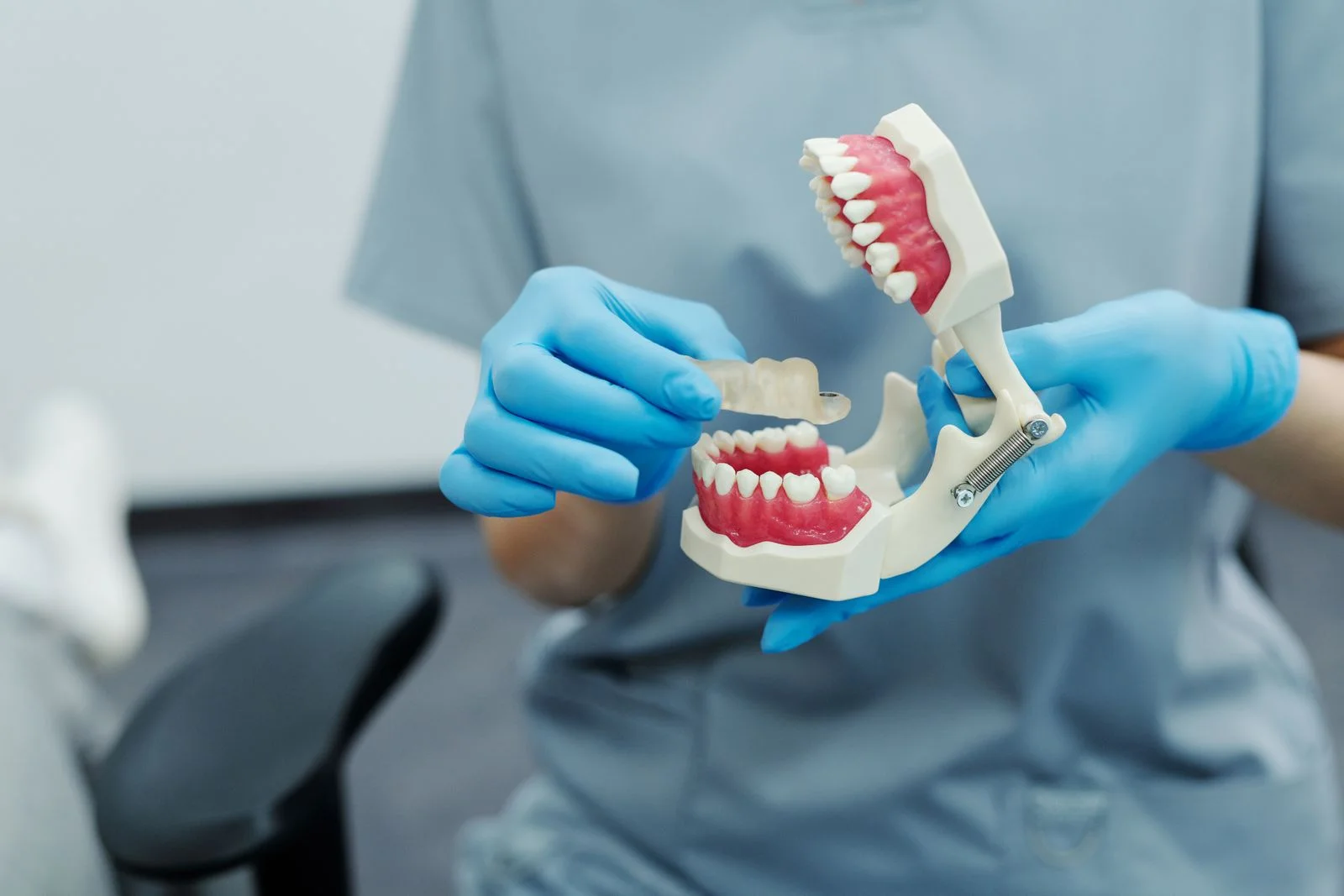
Stock photograph for illustration; not a participating clinic, practitioner, patient or treatment result. Photo: Cedric Fauntleroy / Pexels.
Why preparation matters before your first appointment
Arranging a multiple tooth implant consultation Adelaide is a practical first step, but arriving without preparation often means you leave with unanswered questions. A multiple tooth implant case involves more variables than a single replacement — different restoration designs, staged or simultaneous procedures, and interactions with your general health. Writing down your concerns beforehand gives the treating dentist or specialist the clearest possible picture of your situation and gives you a structured way to compare the information you receive.
This guide is published by a lead-referral service, not a treating practice. All clinical decisions belong to your registered dental practitioner.
Several missing teeth versus several implants — understanding the difference
One of the most common points of confusion is assuming that replacing four missing teeth automatically means four implants. That is not necessarily how it works. A dental implant replaces a missing tooth root and can support a crown, bridge or denture — not always a single crown per gap. Where several teeth are missing in a row, an implant-supported bridge may use fewer implants as anchors to carry multiple artificial crowns between them.
Similarly, a full section of missing teeth might be managed with an implant-retained or implant-supported prosthesis that spans the gap using strategically placed fixtures. The relationship between the number of gaps and the number of implants placed depends on bone volume, the location of the gaps, and how the clinician plans the restoration. Asking your practitioner to explain this relationship specifically for your situation is one of the most useful things you can do at the consultation.
For more detail on how bridge-style restorations work with implants, see our related guide: Implant supported bridge questions.
What the assessment stage involves
Healthdirect Australia notes that an implant assessment involves the health professional asking about your health conditions and medicines, and examining your gums and bone. For multiple missing teeth, this assessment is broader because the clinician is mapping several sites rather than one.
Typically the assessment stage may include:
- A review of your medical history — conditions affecting healing or bone density, and any medicines that could interact with dental surgery, are relevant discussion points.
- Examination of soft tissue — the health of gums surrounding the missing sites matters, because underlying gum disease is a separate condition that may need to be addressed first.
- Bone volume at each site — where bone has resorbed after tooth loss, grafting may be discussed before or alongside implant placement. This is a separate clinical step, not part of every case.
- Imaging — X-rays or three-dimensional scans give the practitioner information about bone depth and proximity to nerves or sinuses.
- Restoration planning — the assessment feeds into a treatment plan that sequences any preparatory work, implant placement and final restoration.
Healthdirect also notes that more than one appointment is involved and that alternatives — including removable dentures and bridges supported by neighbouring teeth — are part of the conversation. Asking about those alternatives is reasonable and appropriate.
Alternatives worth discussing at the consultation
Implants are not the only way to replace multiple missing teeth, and the Australian Dental Association advises discussing the benefits of options with the dentist. The two most commonly compared alternatives are:
Conventional bridge: A fixed prosthesis anchored to natural teeth on either side of a gap. This does not require surgery but does involve preparing the neighbouring teeth, which may already be restored or damaged.
Removable partial or full denture: A removable option that can replace multiple teeth. Some dentures can be supported or retained by implants if that design suits the clinical situation, though the specific attachment type and suitability are for your practitioner to assess.
Each option carries different maintenance considerations, long-term implications for neighbouring teeth and bone, and cost structures. Asking for the dentist’s reasoning — not just a recommendation — helps you understand which factors are most relevant to your situation.
See also: Dental implants compared with bridges questions to ask.
A hypothetical scenario: how the number of questions can expand
This is a hypothetical illustration, not a customer story.
Imagine someone attending a consultation for three adjacent missing teeth on the lower jaw and two separate missing teeth on the upper jaw — five gaps in total. Rather than a uniform plan, they receive a staged proposal: a small bone graft at one lower site, two implants supporting a three-unit bridge on the lower jaw, and two individual implants on the upper jaw. The consultation covers five distinct topics: the graft, two implant placements on different timelines, the bridge design, and the two upper crowns. Without a prepared list of questions, it would be easy to leave having understood only part of the plan. A written checklist means nothing gets missed.
Written questions to bring to your consultation
Healthdirect’s general advice on healthcare consultations recommends writing down questions and asking for explanations in understandable language, covering options, risks, benefits and uncertainty. The TGA similarly encourages patients to ask about alternatives, expected costs, potential complications and where to get further information before proceeding with any implant procedure.
A useful starting list for a multiple tooth implant consultation:
- How many implants are you recommending and why that number for my specific gaps?
- What type of restoration will sit on the implants — individual crowns, a bridge, or a prosthesis?
- Is there any preparatory treatment needed before implant placement, such as gum treatment or bone grafting?
- How many appointments are involved and what is the approximate total timeframe?
- What are the realistic alternatives for my situation, and what are the trade-offs of each?
- Can you walk me through the full written quotation so I understand what each line item covers?
- What complications are possible, and how are they managed if they arise?
- Are there any aspects of my medical history or current medicines I should flag before we proceed?
- What does the maintenance of this restoration look like long term?
Healthdirect specifically advises asking the dental professional to explain the whole quotation — a practical step that is easy to overlook when a plan is complex.
Verifying practitioner registration
Ahpra and the National Boards maintain publicly searchable registers of dental practitioners, including specialist registration in fields such as periodontology or oral and maxillofacial surgery. Searching by the individual practitioner’s name — rather than a clinic or business name — is the accurate way to confirm registration status. Registration status does not constitute any endorsement by this referral website.
Ready to arrange an enquiry?
This site connects people seeking dental implant information with consultation enquiry pathways. If you are replacing multiple teeth, our Multiple Tooth Implant Enquiries service is the relevant starting point. If you are unsure of the scale of your needs, you can also explore Single Tooth Implant Enquiries or Full Arch Implant Enquiries for context.
Further reading
- healthdirect Australia — Dental implant: https://www.healthdirect.gov.au/procedures/dental-procedures-and-appliances/dental-implant
- healthdirect Australia — Questions to ask your doctor: https://www.healthdirect.gov.au/healthcare-and-services/general-health/questions-to-ask-your-doctor
- Therapeutic Goods Administration — Five questions to ask your health professional before you get a medical implant: https://www.tga.gov.au/resources/explore-topic/cosmetics/five-questions-ask-your-health-professional-you-get-medical-implant
- Ahpra — Registers of Practitioners: https://www.ahpra.gov.au/Registration/Registers-of-Practitioners/Professions-and-Divisions.aspx
Sources and further reading
- healthdirect Australia — dental implant
- Australian Dental Association — crowns bridges and veneers
- Australian Dental Association — dentures
- Therapeutic Goods Administration — five questions ask your health professional you get medical implant
- healthdirect Australia — questions to ask your doctor
- Ahpra practitioner information — Professions and Divisions.aspx
Source links provide background, not an endorsement or clinical review of this page. Read our editorial approach.