
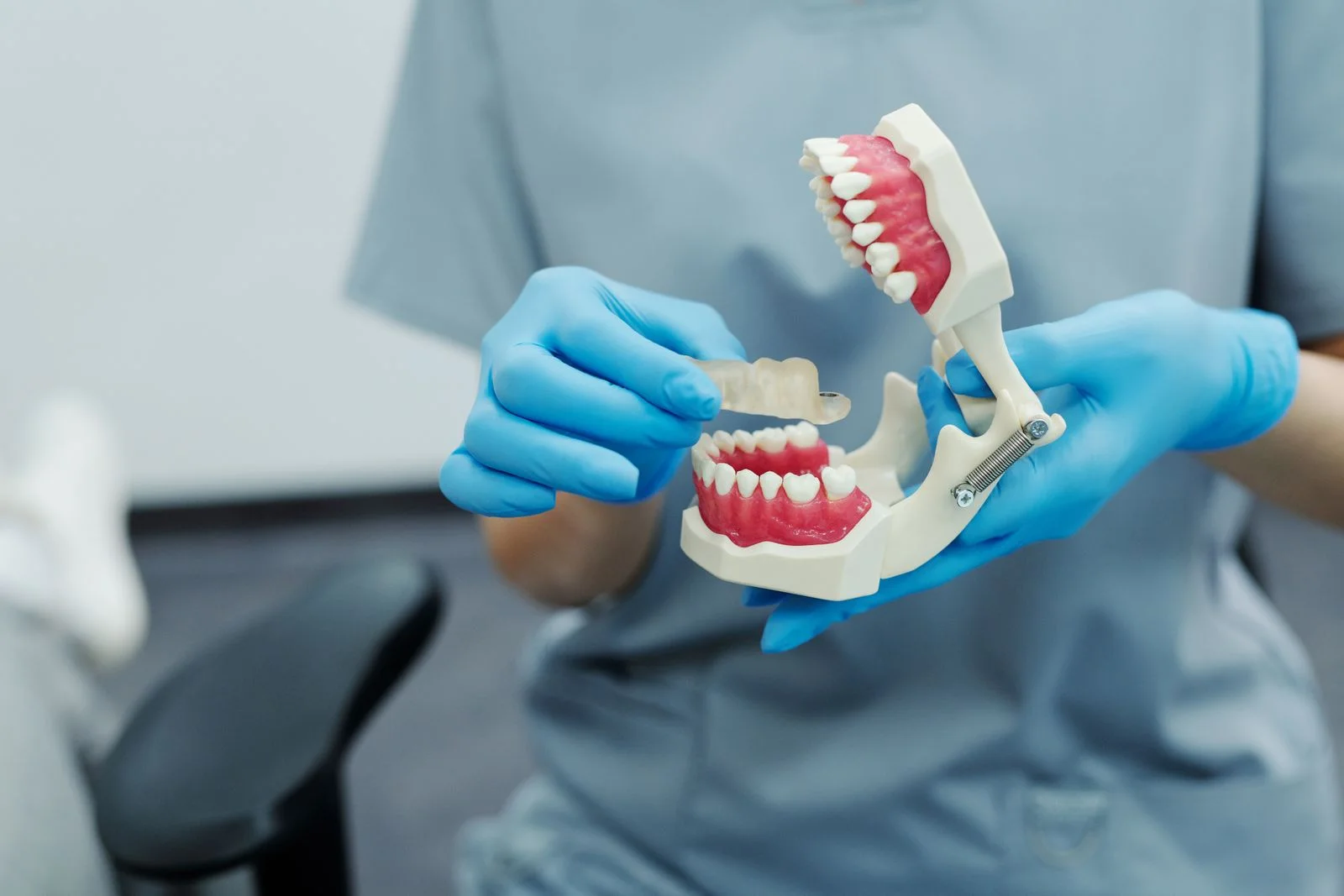
Stock photograph for illustration; not a participating clinic, practitioner, patient or treatment result. Photo: Cedric Fauntleroy / Pexels.
What dental implants are, in plain language
A dental implant is a small fixture placed into the jawbone to replace the root of a missing tooth. Once integrated with the surrounding bone, it can support a crown (for a single missing tooth), a bridge (for several adjacent missing teeth), or a denture (for more extensive tooth loss). The implant itself is not the visible tooth — it is the hidden foundation. Understanding this distinction matters before any consultation, because the questions you ask, and the quote you receive, will refer to multiple components rather than a single item.
For a fuller breakdown of how those components relate to each other, the guide Dental implant components explained for a consultation is a useful starting point.
Why a tooth root needs replacing at all
A practitioner needs to assess the area where a tooth is missing, including the surrounding gums and available bone. The visible gap alone does not describe that assessment. If timing or existing bone is discussed, ask the practitioner to explain what their findings mean in your own situation rather than trying to infer the answer from an online diagram.
Alternatives to implants exist. Healthdirect Australia notes that a removable denture or a tooth-supported bridge are the main other options. Each has different implications for adjacent teeth, maintenance and long-term bone volume. The Australian Dental Association similarly notes that the benefits of different restoration options are worth discussing directly with the treating dentist, because no single solution suits every situation.
The components a dentist is likely to describe
Consumers sometimes arrive at a consultation thinking an implant is simply an artificial tooth. In practice, the full restoration typically involves:
- The implant fixture — the implant component placed into bone
- The abutment — a connector that sits on top of the fixture once it has integrated with the bone
- The restoration — the crown, bridge or denture that provides the visible, functional tooth surface
A written quote that separates these components allows clearer comparison between practitioners. Healthdirect recommends asking the dental professional to explain the whole quotation before agreeing to anything.
What a consultation assessment involves
An implant consultation is not simply a conversation — it involves clinical examination. According to Healthdirect Australia, the treating professional will ask about existing health conditions and current medicines, and will assess the condition of gums and the volume and density of bone at the proposed implant site. These factors influence whether implant placement is appropriate, what preparatory treatment (if any) may be needed, and how the overall treatment plan is structured.
More than one appointment is typically involved. The first visit commonly covers examination, record-taking (which may include imaging) and an initial discussion of options. A formal treatment plan and written quote usually follow a thorough assessment rather than being handed out at first contact.
If you are exploring options for a single missing tooth, see Single tooth implant consultation preparation for specific preparation guidance. For multiple missing teeth or full-arch replacement, the publisher’s Multiple Tooth Implant Enquiries and Full Arch Implant Enquiries pages explain the relevant enquiry categories; they do not confirm a provider match or appointment.
A hypothetical scenario: how consultation questions might differ
This is a hypothetical illustration, not a customer account.
Imagine two people attending an implant consultation on the same day. The first person has one missing lower molar with healthy adjacent teeth and adequate bone. The second person has several missing teeth and a history of gum disease. Even if both individuals want similar outcomes, the clinical questions are quite different — the second person is likely to need a more detailed gum health assessment, a discussion of whether preparatory periodontal treatment is needed, and a staged treatment plan. The practical takeaway is that the questions worth preparing depend heavily on your own dental history, which is why arriving with written notes about past treatment, current medications and your main concerns will make the consultation more productive for both you and the practitioner.
Questions worth preparing before your appointment
Healthdirect’s general guidance on consulting health professionals recommends writing questions down beforehand and asking for explanations in language you can understand. The Therapeutic Goods Administration’s consumer guide for medical implants also encourages patients to ask about alternatives, expected benefits, risks and complications, and total likely costs before proceeding.
Useful questions to bring to a dental implant consultation include:
- What does the assessment show about my bone volume and gum health?
- Is any preparatory treatment needed before placement can be considered?
- What are the alternatives to an implant for my situation, and what are the trade-offs?
- Can you provide a written, itemised quote covering all stages?
- What happens if the implant does not integrate — what are the next steps?
- How many appointments are typically involved and over what timeframe?
- Who performs each stage, and what are their qualifications?
On the last point, the Ahpra register allows you to verify that any named dental practitioner holds current registration in Australia. Searching the register by individual name (not just a practice name) is the reliable approach.
For guidance on reading and comparing written quotes, see Dental implant cost and written quote questions and Single tooth implant cost questions.
The referral site’s role versus the treating practitioner’s role
This website collects general enquiries about dental implants in Adelaide for possible follow-up or referral where available — it does not provide clinical assessments, treatment plans or personalised cost estimates. Any statement about whether implants are suitable for a specific person’s situation belongs to a treating registered professional following a thorough clinical examination. The information here is intended to help you arrive at a consultation better prepared, with clearer questions and a basic understanding of the terminology you are likely to encounter.
To begin that process, you can submit a Single Tooth Implant Enquiry or explore options for more extensive tooth replacement through the multiple-tooth or full-arch enquiry services.
Further reading
- Healthdirect Australia — Dental implant overview
- Therapeutic Goods Administration — Five questions to ask your health professional before you get a medical implant
- Australian Dental Association — Crowns, bridges and veneers
- Australian Dental Association — Dentures
- Ahpra — Registers of Practitioners
Sources and further reading
- healthdirect Australia — dental implant
- Australian Dental Association — crowns bridges and veneers
- Australian Dental Association — dentures
- Therapeutic Goods Administration — five questions ask your health professional you get medical implant
- healthdirect Australia — questions to ask your doctor
- Ahpra practitioner information — Professions and Divisions.aspx
Source links provide background, not an endorsement or clinical review of this page. Read our editorial approach.