
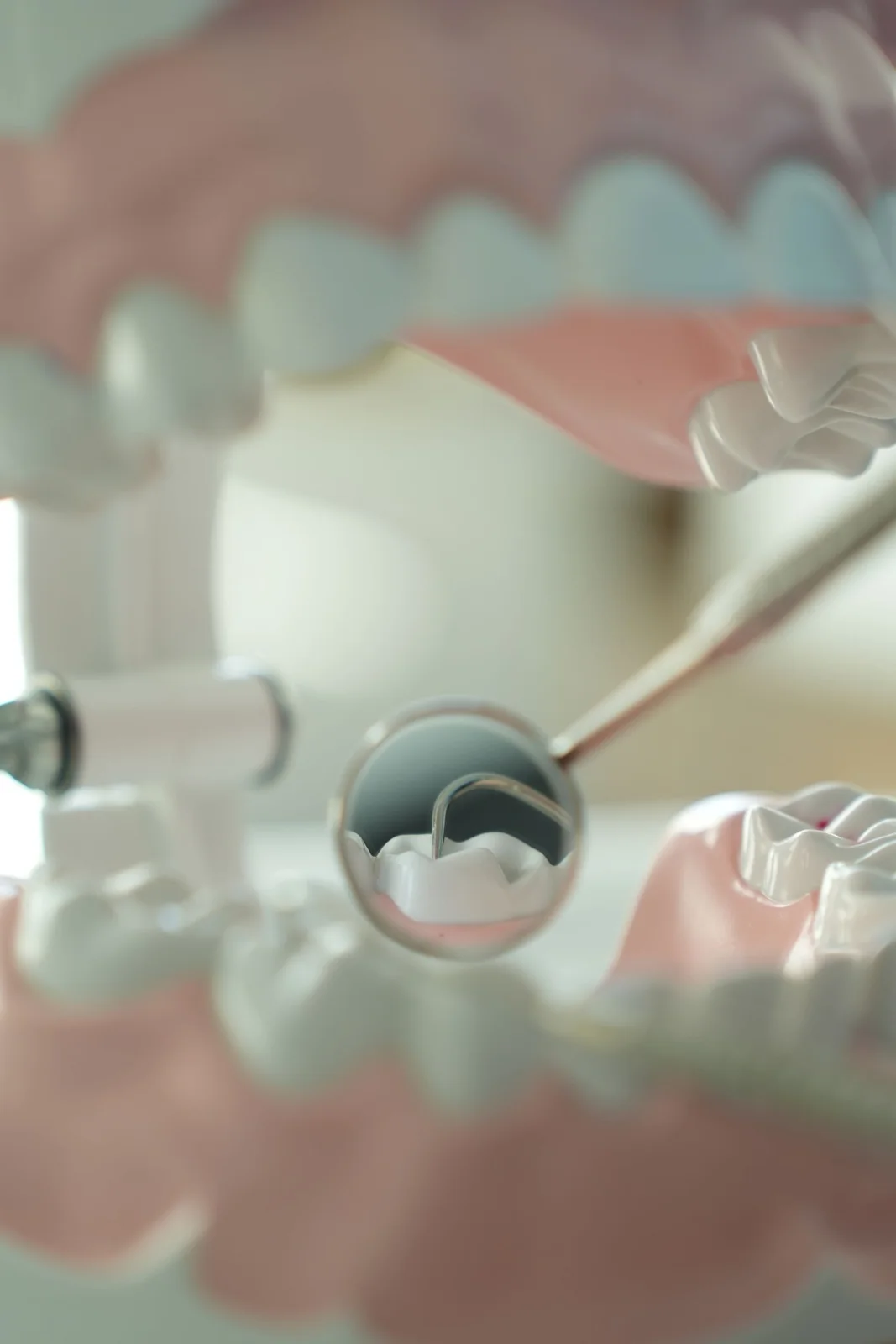
Stock photograph for illustration; not a participating clinic, practitioner, patient or treatment result. Photo: Busenur Demirkan / Pexels.
What does “all on 6” actually mean?
If you’ve been researching full-arch tooth replacement, the label all on 6 refers to a treatment concept in which a complete arch of prosthetic teeth — covering either the upper or lower jaw — is supported by six dental implants rather than individual implants for every missing tooth. The name is descriptive shorthand, not a regulated clinical term, and the specifics of how those six implants are positioned, what prosthesis sits on top, and whether the result is fixed or removable are details that only a treating dental practitioner can determine after examining your jaw, bone volume and overall health.
Healthdirect Australia explains that a dental implant replaces a missing tooth root and can support a crown, bridge or denture — meaning the implant itself and the visible restoration are distinct components. Understanding that distinction helps you ask better questions.
How the six-implant concept differs from other full-arch approaches
You may also encounter the term all on 4, which uses four implants per arch and sometimes positions the rear implants at an angle to avoid certain anatomical structures. All on 6 is often described as using two additional implants, which some practitioners argue distributes load differently across the arch. However, neither the number four nor six is universally prescribed — a practitioner recommends a configuration based on bone availability, density and individual anatomy.
See our companion guide on all on four terminology and consultation questions for a side-by-side look at how the two labels are used in practice.
The prosthesis: what sits on top of the implants
The implants themselves are only part of the picture. What you actually see and use is the prosthesis — an arch of artificial teeth attached to the implants via abutments and connecting hardware. This prosthesis may be:
- Fixed (non-removable): Screwed or cemented in place and only removed by a dental professional at scheduled intervals.
- Implant-retained but removable: Clipped or snapped onto the implants so the wearer can remove it for cleaning.
The Australian Dental Association notes that crowns, bridges and dentures are distinct restoration categories — terminology matters when you’re comparing quotes. When a quote describes your all on 6 prosthesis, ask specifically whether it is a fixed bridge, a hybrid prosthesis or an overdenture, and what material the arch is made from (acrylic, zirconia or porcelain-fused options are common, though each has different properties your practitioner should explain).
For a broader look at how fixed and removable options compare, see fixed and removable implant options questions.
What the assessment process typically involves
Healthdirect Australia notes that before any implant treatment, the health professional reviews your general health conditions and medicines, and assesses your gums and bone. More than one appointment is usually involved. For a full-arch case, this assessment phase commonly includes:
- Imaging — Panoramic X-rays or cone-beam CT scans to map bone volume and locate anatomical structures.
- Medical and medication history — Certain medicines and health conditions affect healing and may influence treatment planning.
- Gum health evaluation — Existing periodontal disease is typically addressed before implants are placed.
- Discussion of alternatives — Healthdirect lists a removable denture or a tooth-supported bridge as alternatives worth discussing, even when implants are the preferred option.
If you’re preparing for that first appointment, our guide on full arch implant consultation questions covers what to bring and what to expect.
Understanding your quote
Healthdirect Australia specifically advises asking your dental professional to explain the whole quotation. Full-arch implant quotes can vary in structure, and line items you should be able to identify include:
- Implant placement (surgical phase)
- Abutments and connecting components
- The prosthesis itself
- Temporary restorations used during the healing period
- Imaging and planning appointments
- Any extractions, bone grafting or tissue management needed beforehand
- Ongoing maintenance or hygiene appointments
If a quote you’ve received doesn’t itemise these components, ask for a written breakdown before you proceed. Our full arch implant enquiries service can connect you with practitioners who provide detailed treatment proposals.
Questions to bring to your consultation
The Therapeutic Goods Administration’s consumer guidance for people considering medical implants encourages asking about alternatives, benefits, risks, complications and expected costs. Healthdirect also recommends writing down your questions beforehand and asking for plain-language explanations. The following list is a practical starting point — a hypothetical scenario, not a clinical protocol:
About the design:
- Why are six implants recommended for my situation rather than four or another number?
- Will the prosthesis be fixed or removable, and what are the practical differences for cleaning and long-term care?
- What material is the arch made from, and what are the trade-offs between materials?
- Are angled implants involved, and if so, why?
About the process:
- How many appointments will the full treatment involve?
- Will I have teeth during the healing phase, and what will they look like?
- Do I need extractions, bone grafting or gum treatment before implants can be placed?
- What medicines or health conditions could affect my suitability or healing?
About risks and alternatives:
- What are the specific risks for someone with my health history?
- What happens if one implant fails — does the whole arch need to be redone?
- Have you explained why a conventional denture or implant-retained denture isn’t preferable in my case?
About the quote:
- What does each line item cover?
- Are there likely additional costs if extractions or grafting are needed?
- What follow-up and maintenance is included, and what is charged separately?
See also our guide on implant retained dentures terminology and questions if a practitioner raises that as an alternative.
Verifying your practitioner’s registration
Dental implant surgery is performed by registered dental practitioners, and in some cases by dental specialists such as periodontists or oral and maxillofacial surgeons. Ahpra and the National Dental Board maintain a publicly searchable register at ahpra.gov.au. Search the individual practitioner’s name — not just the clinic name — and confirm their registration status and any specialist endorsement before proceeding.
Ready to request a consultation enquiry?
This site is an independent lead-referral service, not a treating practice. If you’re ready to speak with a practitioner about all on 6 dental implants in Adelaide, use our full arch implant enquiries or multiple tooth implant enquiries service to submit a consultation request. Bring your written questions and ask for a detailed written quote — that’s the advice Healthdirect gives every patient, and it applies here too.
Further reading
- Healthdirect Australia — Dental implant procedures
- Therapeutic Goods Administration — Five questions to ask your health professional before you get a medical implant
- Healthdirect Australia — Questions to ask your doctor
- Ahpra — Registers of practitioners
Sources and further reading
- healthdirect Australia — dental implant
- Australian Dental Association — crowns bridges and veneers
- Australian Dental Association — dentures
- Therapeutic Goods Administration — five questions ask your health professional you get medical implant
- healthdirect Australia — questions to ask your doctor
- Ahpra practitioner information — Professions and Divisions.aspx
Source links provide background, not an endorsement or clinical review of this page. Read our editorial approach.