
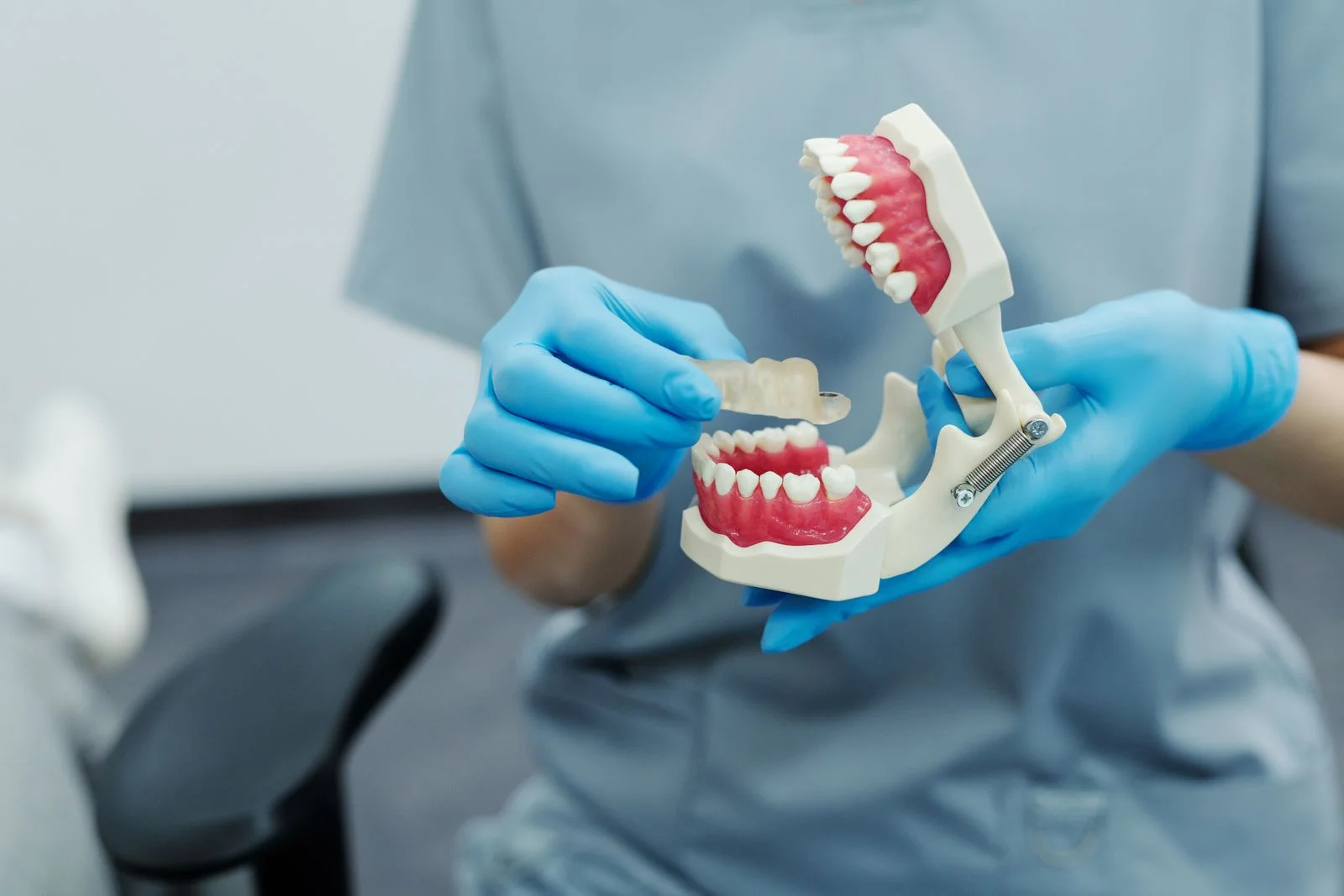
Stock photograph for illustration; not a participating clinic, practitioner, patient or treatment result. Photo: Cedric Fauntleroy / Pexels.
The short answer: what the terms actually mean
When a dentist or specialist proposes implant-based tooth replacement, they may describe the planned appliance as either fixed or removable. Fixed implant restorations are attached to the implants permanently and can only be removed by a clinician. Removable implant restorations — sometimes called implant-retained or implant-supported dentures — can be taken out by the wearer, but rely on the implants for stability rather than on suction or adhesive alone. Both categories use dental implants as the anchoring foundation.
Why the terminology gets confusing
The language around implant dentistry is not standardised in everyday use, and patients often encounter different terms for similar concepts depending on which practice they visit. Here are some distinctions worth clarifying with your treating dentist:
- Implant-retained denture — the implants hold the denture in place, usually through attachments such as locator-style clips or a bar, but the denture still rests partially on the gum. The wearer removes it for cleaning.
- Implant-supported denture — the implants bear most or all of the load, with less reliance on the gum tissue underneath.
- Fixed implant bridge or arch — the prosthesis is screwed or cemented directly to the implants and is not removed by the patient.
- Crown on an implant — a single artificial tooth attached to a single implant, which is a different clinical situation from a full or partial arch replacement.
According to the Australian Dental Association, dentures are a broad tooth-replacement category and some dentures can be supported or retained by dental implants. The term your dentist uses should refer to a specific design rather than a marketing label, so ask them to explain the exact mechanism.
How an implant works as a foundation
A dental implant replaces a missing tooth root, according to Healthdirect Australia. The implant itself is placed in the jawbone and, once integrated, can support a crown, bridge or denture depending on the clinical plan. This distinction matters when you are comparing options: the implant is the root-like component, and the visible restoration sitting above it is a separate element.
Understanding this two-part structure helps you ask more precise questions. For example, if a dentist recommends an overdenture, you can ask specifically about both the implant placement component and the design of the denture portion that clips onto it.
Questions to ask about a fixed appliance
If the proposed treatment involves a non-removable restoration, consider asking:
- How is the restoration attached to the implants — screwed or cemented?
- Can it be removed in the future if maintenance is needed?
- What materials is the arch or bridge made from?
- How are soft tissues and the area underneath cleaned if I cannot remove it?
- What happens if one implant fails — does the whole structure need to be remade?
- What is the full scope of appointments involved, from placement to fitting?
Healthdirect Australia notes that more than one appointment is involved in dental implant treatment and that the health professional should explain the whole treatment plan and quotation clearly. This applies equally to fixed arch cases, which typically involve multiple clinical stages.
Questions to ask about a removable implant appliance
For removable options such as an overdenture or clip-retained denture, relevant questions include:
- What type of attachment system is proposed, and what are the maintenance requirements for those attachments?
- How often do the attachments or clips typically need replacement?
- Does the denture still rest on the gum at all, or is it fully supported by the implants?
- How do I clean both the denture and the implants themselves?
- What is the difference in cost between this option and a fixed alternative, and what accounts for that difference?
- If my bone or gum changes over time, how might that affect the fit?
The Therapeutic Goods Administration’s consumer guidance for medical implants encourages patients to ask their health professional about alternatives, benefits, risks, complications and expected costs before proceeding. These questions are a reasonable starting framework regardless of which implant appliance category is proposed.
A hypothetical comparison scenario
The following is a hypothetical example for illustration only — it is not a real patient case.
Imagine two people attending separate consultations for full lower-arch replacement. The first is offered a fixed screw-retained arch and asks only about the final appearance. The second prepares questions about attachment type, cleaning access, what happens if an implant fails, and the number of appointments involved. The second person leaves with a clearer understanding of what the treatment actually entails day-to-day, which makes it easier to compare the proposal against any other consultations they attend and to have a genuinely informed discussion about whether to proceed.
This scenario illustrates why preparing questions in advance — written down before you attend — is consistently recommended. Healthdirect Australia advises patients to write down questions before appointments and to ask for explanations in understandable language when anything is unclear.
Verifying your treating practitioner
Before proceeding with any implant treatment, it is straightforward to check that the dentist or specialist performing the work is registered. Ahpra and the National Boards maintain a public register of dental practitioners. You can search by individual name rather than business name, as registration is held by the person, not the practice. This is a basic due-diligence step available to any consumer.
What to do before your consultation
This site collects implant-related enquiries in Adelaide for possible follow-up or referral where available — it does not perform assessments or recommend treatment. The clinical decisions about whether a fixed or removable implant option is appropriate for you depend on a formal assessment of your gum health, bone volume, medical history and current medications, all of which Healthdirect Australia identifies as part of a proper implant assessment process.
If you are preparing for a first consultation, our Full Arch Implant Enquiries and Multiple Tooth Implant Enquiries pages can help connect you with Adelaide practices. You may also find the following guides useful before your appointment:
- Full arch implant consultation questions
- Implant retained dentures terminology and questions
- All on four terminology and consultation questions
- All on six terminology and consultation questions
Further reading
- Healthdirect Australia — Dental implant: https://www.healthdirect.gov.au/procedures/dental-procedures-and-appliances/dental-implant
- Australian Dental Association — Dentures: https://teeth.org.au/dentures
- Therapeutic Goods Administration — Five questions to ask your health professional about a medical implant: https://www.tga.gov.au/resources/explore-topic/cosmetics/five-questions-ask-your-health-professional-you-get-medical-implant
- Ahpra Registers of Practitioners: https://www.ahpra.gov.au/Registration/Registers-of-Practitioners/Professions-and-Divisions.aspx
Sources and further reading
- healthdirect Australia — dental implant
- Australian Dental Association — dentures
- Therapeutic Goods Administration — five questions ask your health professional you get medical implant
- healthdirect Australia — questions to ask your doctor
- Ahpra practitioner information — Professions and Divisions.aspx
Source links provide background, not an endorsement or clinical review of this page. Read our editorial approach.