
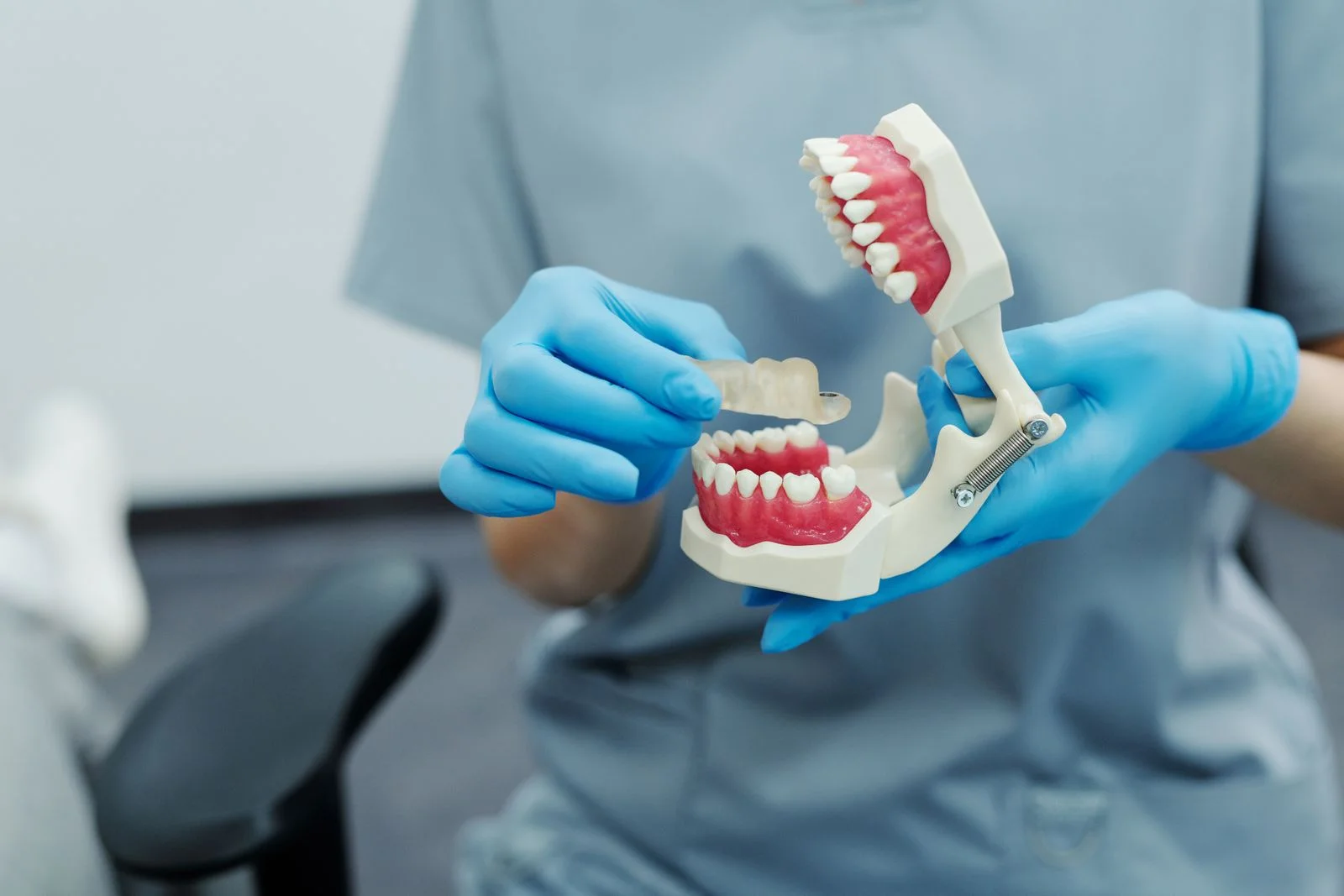
Stock photograph for illustration; not a participating clinic, practitioner, patient or treatment result. Photo: Cedric Fauntleroy / Pexels.
If a dentist mentions a bone graft during your implant consultation, it means they have identified that the jaw may need additional bone volume before or alongside implant placement. This is a relatively common part of implant planning, not a complication or a problem unique to you. Understanding the terminology beforehand lets you ask more productive questions and leave the appointment with a clearer picture of what any proposed treatment plan actually involves.
Why bone volume matters for implants
A dental implant replaces a missing tooth root by integrating with the jawbone. For that integration to be possible, the bone needs sufficient width and height to support the implant physically. When a tooth has been missing for some time, the surrounding bone can reduce in volume—a process known as resorption. Gum disease, infection, injury or the way a previous tooth was lost can all affect how much bone remains. Because assessment and a treatment plan are always required before proceeding, the treating clinician will examine the bone present before recommending any grafting procedure.
None of this can be assessed from an online form or a photo. Only the clinician conducting your appointment, with access to appropriate imaging, can tell you whether grafting is relevant to your situation.
Common bone grafting terms you may encounter
Consultations can involve terminology that feels unfamiliar. Having a working understanding of these terms before you arrive helps you follow the explanation rather than trying to decode it in real time.
- Bone graft / bone augmentation — a procedure that adds bone material to an area of the jaw to increase volume before or at the time of implant placement.
- Ridge preservation (socket preservation) — grafting material placed into an extraction socket immediately after a tooth is removed, with the aim of maintaining the bone shape during healing.
- Sinus lift (sinus augmentation) — a procedure relevant to the upper jaw, where the floor of the sinus cavity is raised to create space for additional bone material in the back of the mouth.
- Guided bone regeneration (GBR) — a technique that uses a membrane to hold grafting material in place and encourage the body’s own bone-forming processes.
- Autograft, allograft, xenograft, alloplast — terms describing where the graft material originates: the patient’s own body, a human donor, an animal source or a synthetic material respectively. Each has different clinical considerations that the treating practitioner will explain.
- Osseointegration — the process by which the implant fuses with existing bone over time. Adequate bone volume supports this process.
Ask the clinician to explain any term in plain language. Healthdirect recommends writing down questions and asking for explanations you can actually understand.
Questions worth preparing before your consultation
Armed with the vocabulary above, consider preparing questions such as:
- Do you recommend a bone graft in my case, and why?
- What imaging has been or will be taken to assess my bone volume?
- Which type of graft material would you use, and what are the reasons for that choice?
- Is grafting performed at the same appointment as the implant placement, or as a separate stage?
- How does adding a graft procedure affect the overall treatment timeline?
- What are the risks or possible complications specific to the grafting stage?
- Are there alternatives if I choose not to have a graft?
- How is the grafting procedure itemised in the written quote?
The TGA’s consumer guidance for medical implants encourages patients to ask their health professional about alternatives, benefits, risks, complications and expected costs before agreeing to any procedure. Bone grafting is a separate clinical step from implant placement, so it is reasonable to expect it to appear as a distinct line item in any written quote.
See our related guide on dental implant cost and written quote questions for more on reading a detailed quotation.
A hypothetical scenario to illustrate the consultation flow
The following is a hypothetical example to illustrate consultation preparation—not a real patient story.
Imagine someone who had a lower molar extracted several years ago and has decided to explore a dental implant. At the consultation, the clinician reviews a cone beam CT scan and explains that the bone in that region has narrowed. They outline two possible approaches: placing a smaller-diameter implant without grafting, or performing a ridge augmentation procedure first and placing a standard implant after healing. Each option carries different timelines and fee structures.
Because this person had prepared a list of questions, they were able to ask which material would be used for the graft, how the healing period would be monitored and whether both options would be presented in writing. They left with a treatment plan document to review before making any decision. That outcome—leaving with enough information to make a considered choice—is a realistic goal for a first implant consultation.
How bone grafting affects the overall treatment timeline
When grafting is performed as a separate stage before implant placement, the overall treatment takes longer than implant placement alone. The graft site typically requires a period of healing before the bone is considered ready to support an implant. Some techniques allow grafting and implant placement to happen simultaneously, which may shorten the overall schedule. The clinician assessing your jaw will be best placed to explain what sequence they recommend and why, and what that means for the number of appointments involved.
Healthdirect notes that more than one appointment is involved in dental implant treatment. When grafting is part of the plan, that number increases.
What to bring to the consultation
To make your consultation as useful as possible:
- Bring a list of your current medications and any supplements—the clinician asks about these as part of assessment.
- Note any health conditions, particularly those affecting healing, blood clotting or immune response.
- Bring any recent dental X-rays if you have them, though the treating practice may need to take their own imaging.
- Write down your questions in advance rather than relying on memory.
- Ask for a written treatment plan and quote before you leave so you can review it at home.
See our guide on single tooth implant consultation preparation for a broader checklist of what to expect at a first appointment.
Checking who performs your procedure
Bone grafting and implant placement are clinical procedures. In Australia, dental practitioners are registered through Ahpra. You can search the public register to verify that an individual is currently registered and check whether they hold any specialist registration relevant to implant or periodontal procedures. Search by the practitioner’s individual name rather than the business or practice name.
This referral site connects prospective patients with dental implant providers but is not a treating practice and does not assess clinical suitability.
Next steps
If you are ready to arrange a consultation to discuss dental implant options—including whether bone grafting may be relevant—you can submit an enquiry through our Single Tooth Implant Enquiries, Multiple Tooth Implant Enquiries or Full Arch Implant Enquiries pages.
For broader background before your appointment, the guide on what dental implants are and what a consultation establishes and the guide on dental implant components explained for a consultation are useful starting points.
Further reading
- Healthdirect Australia — Dental implant: https://www.healthdirect.gov.au/procedures/dental-procedures-and-appliances/dental-implant
- American Academy of Periodontology — Dental implant procedures: https://www.perio.org/for-patients/periodontal-treatments-and-procedures/dental-implant-procedures/
- Therapeutic Goods Administration — Five questions to ask your health professional: https://www.tga.gov.au/resources/explore-topic/cosmetics/five-questions-ask-your-health-professional-you-get-medical-implant
- Healthdirect Australia — Questions to ask your doctor: https://www.healthdirect.gov.au/healthcare-and-services/general-health/questions-to-ask-your-doctor
- Ahpra Registers of Practitioners: https://www.ahpra.gov.au/Registration/Registers-of-Practitioners/Professions-and-Divisions.aspx
Sources and further reading
- healthdirect Australia — dental implant
- healthdirect Australia — questions to ask your doctor
- Therapeutic Goods Administration — five questions ask your health professional you get medical implant
- Ahpra practitioner information — Professions and Divisions.aspx
Source links provide background, not an endorsement or clinical review of this page. Read our editorial approach.