
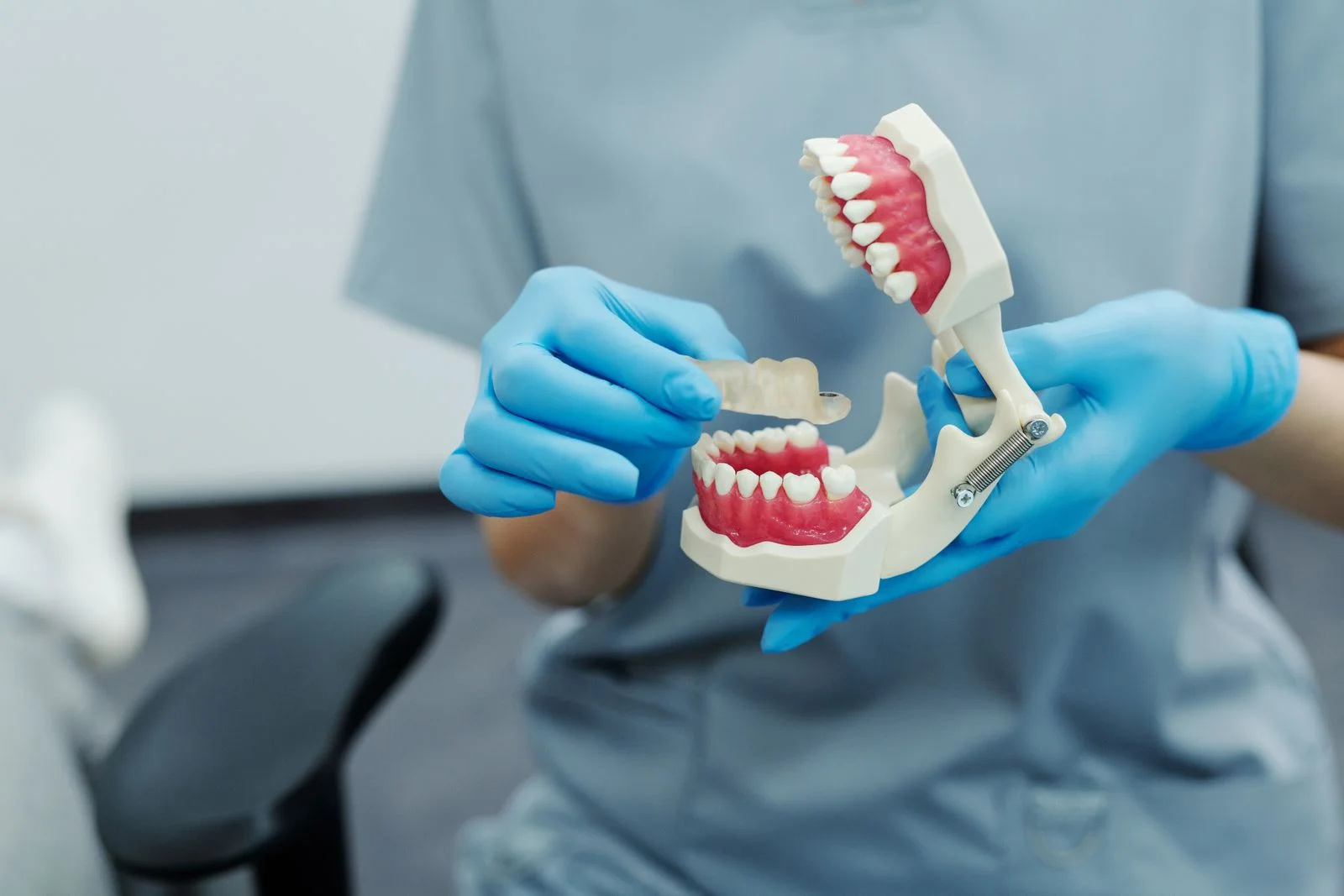
Stock photograph for illustration; not a participating clinic, practitioner, patient or treatment result. Photo: Cedric Fauntleroy / Pexels.
The short answer: who you contact depends on the stage you’re at
If you’re looking for an implant dentist in Adelaide, the most practical first contact is usually a general dentist or a registered dental specialist with implant experience. That person will assess your situation, refer you onward if specialist input is needed, and coordinate any multi-stage treatment. Knowing which registration category and clinical role to look for — before you book — saves time and sets realistic expectations for your first appointment.
Why the practitioner’s registration category matters
In Australia, dental practitioners are registered under the National Registration and Accreditation Scheme and appear on the Ahpra public register. The register records whether a practitioner holds general dental registration or specialist registration — and if specialist, in which recognised specialty.
Several dental specialties are relevant to implant treatment: oral and maxillofacial surgery, periodontology (gum and bone specialist), and prosthodontics (restoration and prosthetics specialist). A general dentist with additional implant training can also place and restore implants in straightforward cases. Neither category is universally “better” — the right fit depends on your clinical situation, which only an assessment appointment can determine.
What you can do before booking: search the Ahpra register by practitioner name to confirm their registration status and specialty listing. Search the clinic’s business name, then verify the named individual — registration status belongs to the person, not the business.
Understanding the multi-stage nature of implant treatment
Healthdirect Australia notes that dental implant treatment involves more than one appointment. That means the person you contact first is rarely the only practitioner involved. A broadly common sequence involves assessment, any preparatory treatment (such as bone grafting or gum management), implant placement, a healing period, and then restoration with a crown, bridge, or denture.
The American Academy of Periodontology notes that implant placement requires a treatment plan tailored to individual needs, and that gum and bone health are core considerations — dental implants are, in their words, “intimately connected with the soft tissues (i.e., gums) and underlying hard tissues (i.e., bone) in the mouth.”
This multi-stage reality has a practical implication: when you contact a practice, ask whether the assessment, surgical, and restorative stages will all be carried out at that practice, or whether referrals to other practitioners are part of their workflow. Neither model is inferior, but knowing in advance helps you plan time and ask the right cost questions. See our guide on dental implant cost and written quote questions for what to cover when you receive a treatment plan.
Who typically performs each stage
Assessment and planning: Usually the first clinician you see — a general dentist or specialist — who reviews your medical history, medicines, gum health, and bone volume. Healthdirect notes that some medications can impact whether you should have a dental implant, and the treating professional will check that you have enough bone to hold the implant. This stage results in a treatment plan, not an immediate procedure.
Preparatory procedures: If bone volume or gum health requires attention before implant placement, a periodontist or oral surgeon may become involved. These are separate appointments and may add to overall treatment time.
Implant placement: The surgical step of placing the implant fixture into the jaw. Performed by a dentist or specialist with surgical implant training — this may be the referring dentist, an oral surgeon, or a periodontist depending on case complexity.
Restoration: Once the implant has integrated with the bone, a crown, bridge, or implant-supported denture is attached. This is often handled by the referring general dentist or a prosthodontist. The Australian Dental Association notes that crowns and bridges are distinct restoration categories — a bridge, for instance, can replace a missing tooth by placing crowns on the teeth either side of the gap. A crown placed on an implant is a separate restoration from the implant fixture itself.
For a breakdown of the components involved, see dental implant components explained for a consultation.
Questions worth preparing before you contact anyone
Healthdirect recommends writing questions down before healthcare appointments and asking for explanations in plain language — or asking the practitioner to write information down for you to read again later.
A useful pre-contact checklist (hypothetical scenario — adapt to your own situation):
- Registration: Is this practitioner listed on the Ahpra register as a dentist or specialist, and in which category?
- Scope: Does this practice handle all stages, or will I be referred for surgical or restorative steps?
- Assessment first: Will the first appointment be an assessment only, or is a procedure expected?
- Written plan: Will I receive a written treatment plan and itemised quote before any commitment? Healthdirect notes that your dental professional can explain costs and give you a quotation.
- Alternatives: What alternatives — such as a removable denture or a bridge supported by neighbouring teeth — will be discussed? Healthdirect lists these as recognised alternatives to implants.
- Preparatory needs: How will bone and gum health be evaluated, and what happens if further treatment is needed first?
Take this list to your consultation rather than trying to resolve it over the phone — many answers legitimately depend on a clinical examination.
Checking credentials without over-relying on a website
Practice websites vary enormously in the specificity of information they provide. A practitioner may describe themselves as having completed implant training without that training appearing on the Ahpra register as a formal specialist qualification — both situations are legally possible, and they mean different things.
Useful verification steps:
- Search the Ahpra register by the individual practitioner’s name, not the clinic name.
- Note whether the result shows general or specialist registration, and read the specialty field carefully.
- If a clinic advertises a named specialist, verify that specific person — not just the clinic — holds the stated registration.
This is not about distrust; it is simply sound consumer practice before any significant health decision.
Matching your enquiry type to the right starting point
The nature of your tooth-replacement need can guide which service category to enquire about first:
- One missing tooth: A general dentist with implant experience is often an appropriate first contact. See Single Tooth Implant Enquiries for how to submit an enquiry through this site.
- Several missing teeth: May involve a mix of implant-supported and other restorations — worth discussing with a practitioner experienced in treatment planning for partial replacement. See Multiple Tooth Implant Enquiries.
- Full arch replacement: Often involves specialists in both the surgical and prosthetic phases. See Full Arch Implant Enquiries.
For a broader overview of what a consultation is designed to establish, see what dental implants are and what a consultation establishes, and for help preparing specifically for a single-tooth situation, single tooth implant consultation preparation covers the detail.
If you’d like to explore whether a referral to a practitioner may be available through this site, you’re welcome to submit an enquiry.
Further reading
- Healthdirect Australia — Dental implant overview: https://www.healthdirect.gov.au/procedures/dental-procedures-and-appliances/dental-implant
- Ahpra — Registers of practitioners: https://www.ahpra.gov.au/Registration/Registers-of-Practitioners/Professions-and-Divisions.aspx
- Healthdirect Australia — Questions to ask your doctor: https://www.healthdirect.gov.au/healthcare-and-services/general-health/questions-to-ask-your-doctor
- American Academy of Periodontology — Dental implant procedures: https://www.perio.org/for-patients/periodontal-treatments-and-procedures/dental-implant-procedures/
- Australian Dental Association — Crowns, bridges and veneers: https://teeth.org.au/crowns-bridges-and-veneers
Sources and further reading
- healthdirect Australia — dental implant
- Ahpra practitioner information — Professions and Divisions.aspx
- Therapeutic Goods Administration — five questions ask your health professional you get medical implant
- healthdirect Australia — questions to ask your doctor
- Professional dental information — dental implant procedures
- Australian Dental Association — crowns bridges and veneers
Source links provide background, not an endorsement or clinical review of this page. Read our editorial approach.