
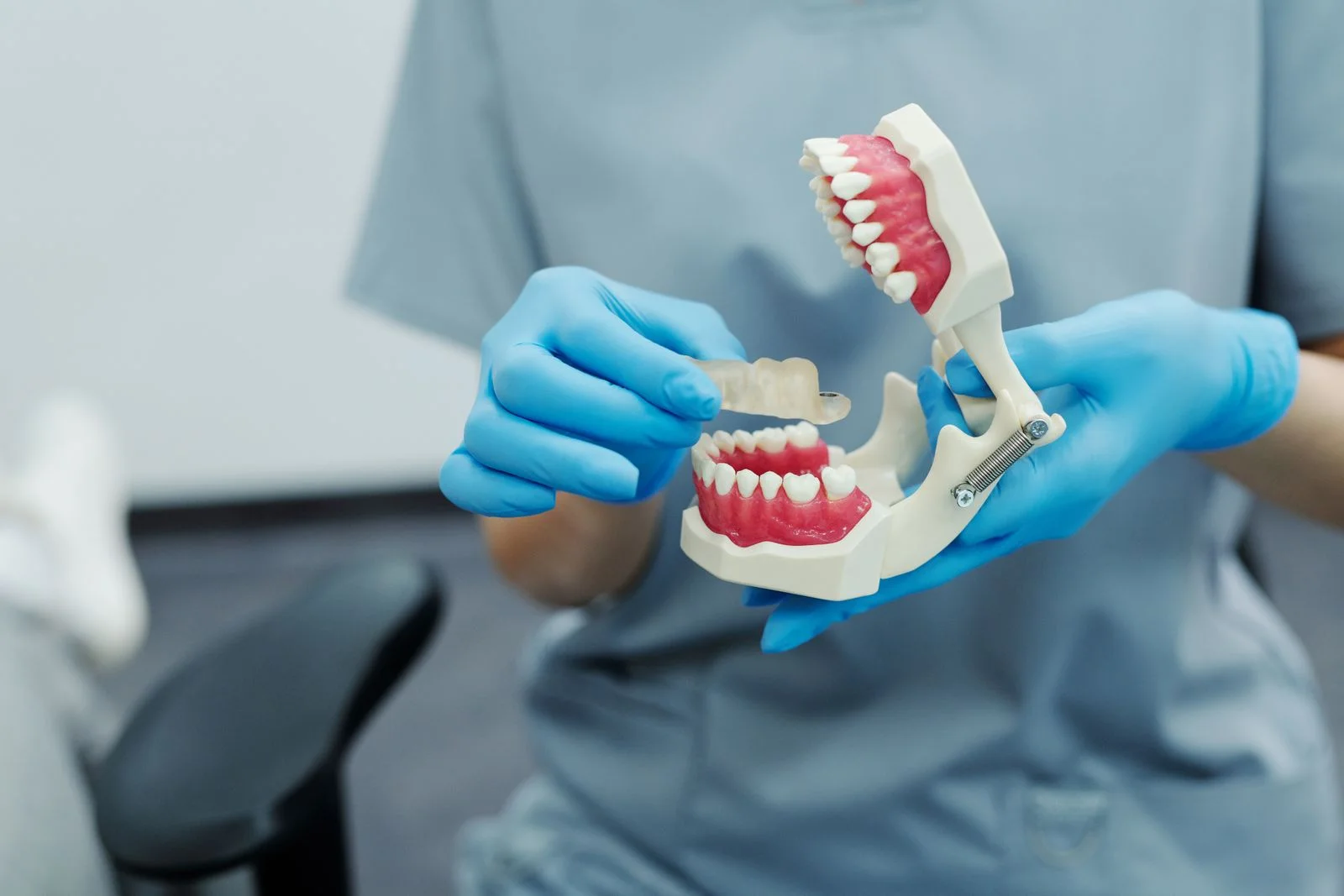
Stock photograph for illustration; not a participating clinic, practitioner, patient or treatment result. Photo: Cedric Fauntleroy / Pexels.
If you are researching tooth replacement, dental implants are one option — but they are not the only one. A removable denture or a fixed bridge supported by neighbouring teeth are established alternatives your dentist can walk you through, and deciding which path suits your clinical situation is their responsibility, not something a referral website can determine for you. The questions below are designed to help you arrive at that conversation well prepared.
Why the alternative question matters before any commitment
Tooth replacement involves a range of clinical trade-offs — bone volume, adjacent teeth, cost, the number of appointments, and long-term maintenance all vary depending on the approach. Healthdirect Australia notes that alternatives to dental implants include a removable denture or a bridge supported by neighbouring teeth, and that any treatment should follow a proper assessment and a written treatment plan. Understanding what those alternatives involve — in general terms — means you can ask meaningful follow-up questions rather than simply accepting the first recommendation without context.
This guide covers the broad categories of alternatives and the consultation questions worth raising. It does not make a recommendation for any individual reader.
The main categories your dentist may discuss
Removable dentures Dentures replace one or more missing teeth with a prosthesis that can be taken out for cleaning. The Australian Dental Association recognises dentures as a tooth-replacement category, and notes that some dentures can be supported or retained by dental implants — meaning dentures and implants are not always mutually exclusive. Your dentist can explain what style of denture may be appropriate for your situation and what maintenance looks like over time.
Fixed dental bridges A conventional bridge spans a gap by anchoring an artificial tooth (or teeth) to crowns fitted over the natural teeth on either side. The Australian Dental Association distinguishes crowns and bridges as a separate restoration category from implants. Because a bridge involves preparing the neighbouring teeth, some patients ask specifically about what that preparation involves and whether those teeth are otherwise healthy — both reasonable questions for your dentist.
Implant-supported dentures or bridges For patients replacing several teeth or a full arch, implant-retained prostheses can combine elements of both categories above. This is relevant if you are exploring options beyond a single tooth implant enquiry and want to understand the broader spectrum. The multiple tooth implant enquiries and full arch implant enquiries pages on this site can connect you with Adelaide practitioners who handle these cases, but clinical suitability is determined at a consultation, not through a referral website.
The “no treatment” conversation
One option people sometimes overlook is asking what happens if the gap is left untreated. This is worth raising explicitly with your dentist. Depending on the location of the missing tooth, your bite, and neighbouring structures, the clinical implications of doing nothing may differ. Your dentist is the appropriate person to explain those consequences for your specific mouth — a referral website cannot make that assessment. Asking “what happens if I do nothing right now?” is a reasonable, direct question that belongs in any tooth-replacement consultation.
Questions to prepare before your appointment
Healthdirect Australia advises writing down questions before any health appointment and asking for explanations in plain language. The Therapeutic Goods Administration’s consumer guidance for medical implants similarly encourages patients to ask about alternatives, benefits, risks, expected costs, and what further information is available. Applying that framework to a tooth-replacement consultation, consider preparing questions such as:
- What replacement options are clinically appropriate for my specific situation, and why?
- What are the realistic advantages and disadvantages of each option you are recommending?
- What does the treatment involve — how many appointments, and over what general timeframe?
- What maintenance or follow-up does each option require long-term?
- What is included in the written quote, and what costs are not included?
- If I choose a bridge or denture now, does that affect my ability to pursue an implant later?
- What happens if I delay treatment?
Our related guide on dental implant cost and written quote questions goes deeper on the financial side of this conversation, and healthdirect Australia specifically recommends asking your dental professional to explain the whole quotation before proceeding.
Hypothetical scenario: comparing two consultation approaches
The following is a hypothetical illustration, not a customer story.
Imagine two people, both with a single missing molar, attending separate consultations. Person A asks only whether they can have an implant. They leave knowing the implant fee but have not asked about the bridge option or what bone grafting, if needed, would add to the total. Person B prepares questions in advance: they ask about both the bridge and implant pathways, what preparing adjacent teeth for a bridge would involve given those teeth already have restorations, what the written quote covers, and what happens if they wait six months. Person B leaves with a clearer basis for a decision — not because they received different clinical advice, but because they asked more targeted questions.
Preparing questions is not about being difficult — it is about informed consent, which every registered dental practitioner is professionally obligated to support.
Verifying your practitioner’s registration
Whichever option you explore, your treating practitioner should be registered with Ahpra. The Ahpra public register allows you to search by the individual’s name — not just a business name — to confirm current registration and any specialist endorsement. Registration does not constitute an endorsement by this referral website, but it is a reasonable baseline check before proceeding with any treatment.
Preparing for the implant-specific side of the conversation
If your consultation leads toward implants being the most appropriate option, additional preparation helps. Our guides on what dental implants are and what a consultation establishes and dental implant components explained for a consultation give a plain-language overview of the implant structure and what an initial appointment typically covers. For single-tooth situations specifically, the single tooth implant consultation preparation guide covers what clinical information your dentist is likely to gather.
The goal of this site is to help Adelaide residents arrive at a consultation with better questions — the clinical decisions stay firmly with the registered practitioner sitting across from you.
Further reading
- Healthdirect Australia — Dental implant overview: https://www.healthdirect.gov.au/procedures/dental-procedures-and-appliances/dental-implant
- Australian Dental Association — Crowns and bridges: https://teeth.org.au/crowns-bridges-and-veneers
- Australian Dental Association — Dentures: https://teeth.org.au/dentures
- Therapeutic Goods Administration — Five questions to ask about a medical implant: https://www.tga.gov.au/resources/explore-topic/cosmetics/five-questions-ask-your-health-professional-you-get-medical-implant
- Ahpra practitioner register: https://www.ahpra.gov.au/Registration/Registers-of-Practitioners/Professions-and-Divisions.aspx
Sources and further reading
- healthdirect Australia — dental implant
- Australian Dental Association — dentures
- Australian Dental Association — crowns bridges and veneers
- healthdirect Australia — questions to ask your doctor
- Therapeutic Goods Administration — five questions ask your health professional you get medical implant
- Ahpra practitioner information — Professions and Divisions.aspx
Source links provide background, not an endorsement or clinical review of this page. Read our editorial approach.