
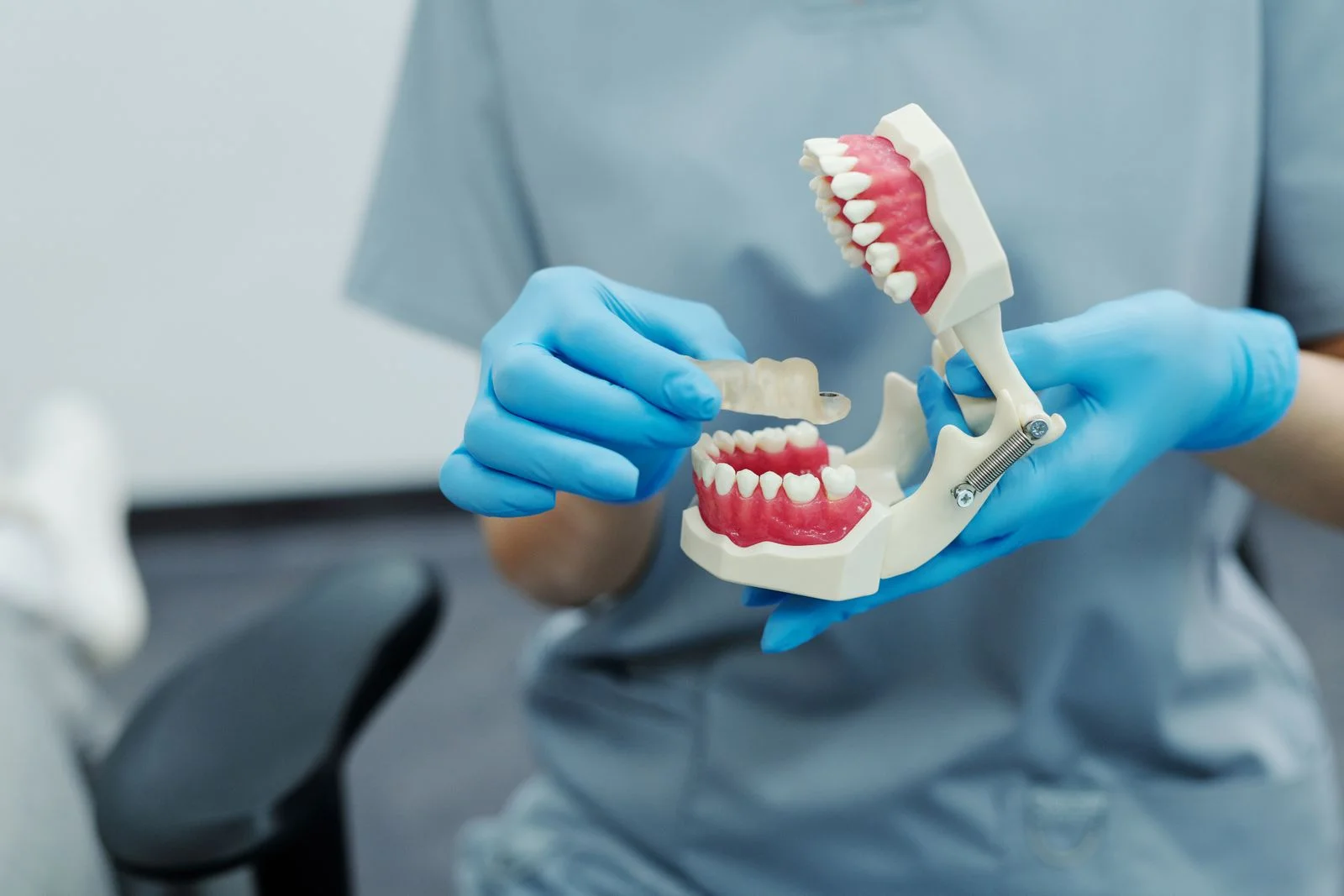
Stock photograph for illustration; not a participating clinic, practitioner, patient or treatment result. Photo: Cedric Fauntleroy / Pexels.
A dental implant consultation is your opportunity to give the treating dentist or specialist the information they need to assess your situation and for you to understand what the process may involve. Coming prepared — with the right records, a list of questions, and realistic expectations about what the appointment will and won’t settle — makes the time more useful for both parties.
What a dental implant consultation is actually trying to establish
Before any treatment can be planned, the dental professional needs to understand several things at once: the state of the gum and jawbone at the missing-tooth site, your general health, your medications, and what restoration you are ultimately trying to achieve. Healthdirect notes that assessment and a formal treatment plan are needed before proceeding, and that the health professional will ask about health conditions and medicines as well as assess the gums and bone.
This is not a single-question visit. More than one appointment is typically involved across the full process, so the first consultation is better understood as the beginning of a planning conversation rather than the point at which everything is decided. See our related guide on what dental implants are and what a consultation establishes for a broader explanation of the process.
Gather your health and dental records before you go
The single most useful thing you can do before a dental implant consultation Adelaide is to assemble the records the clinician is likely to request. Consider bringing:
- A current medication list, including supplements and over-the-counter medicines. Some medicines affect healing, bleeding and bone metabolism, and the treating practitioner needs to know about them.
- Any recent dental X-rays or imaging — even if they were taken at a different practice. Existing radiographs reduce duplication and give the clinician a baseline.
- A written summary of relevant health conditions, particularly anything involving bone density, blood clotting, immune response or diabetes, which Healthdirect identifies as conditions the clinician will want to discuss.
- Private health insurance details, so the practice can check cover on the day if relevant.
- Contact details for your GP in case the implant provider wants to correspond about your medical history.
If you are unsure whether a health condition or medication is relevant, include it anyway. It is quicker for a clinician to rule something out than to discover a gap later.
Understand the tooth-replacement alternatives before you sit down
A dental implant is one of several ways to replace a missing tooth. Healthdirect lists removable dentures and bridges supported by neighbouring teeth as alternatives the dental professional should discuss. The Australian Dental Association notes that crowns, bridges and dentures are distinct restoration categories, and that the benefits of the options should be discussed with the dentist.
Knowing broadly what the alternatives are means you can ask meaningful comparison questions rather than simply accepting or declining one option. It also helps you understand why a clinician might recommend a staged approach or suggest a different restoration type for your specific site. Our guide on dental implant components explained for a consultation covers the vocabulary you are likely to encounter.
A practical scenario: what a well-prepared consultation looks like
The following is a hypothetical scenario to illustrate preparation, not a real patient account.
Imagine a person attending a first dental implant consultation who has prepared a typed one-page summary: current medications and doses, a list of past dental work, two questions about how their blood-thinning medication might affect timing, and a printed question list. They bring a USB stick with imaging from their previous dentist. The appointment moves efficiently to clinical assessment because the administrative and health-history stage takes less time. At the end, they receive a written quote they can take away and review — something Healthdirect specifically advises patients to request and have explained in full.
Contrast this with arriving without records, unable to recall medication names, and expecting to leave with a confirmed start date. The clinician cannot safely plan without that information, and a follow-up information-gathering appointment becomes necessary.
Verifying your treating practitioner’s registration
Dental implant procedures in Australia are performed by registered dental practitioners. Ahpra and the National Boards maintain publicly searchable registers of dental practitioners and specialists. It is worth checking the individual practitioner’s name on the Ahpra register rather than relying solely on a business or clinic name, since registration is attached to the individual. Registration status is a public record; this referral site does not endorse specific practitioners.
What to expect from the written quote
Healthdirect advises patients to ask the dental professional to explain the whole quotation. This matters because an implant treatment quote may include several separate line items — imaging, the implant component itself, any preparatory procedures and the final restoration — which are distinct costs. Our guide on dental implant cost and written quote questions explains the kinds of questions worth raising about a written quote before you commit.
The Therapeutic Goods Administration’s consumer question guide for medical implants also encourages patients to ask about alternatives, expected costs, benefits and risks when speaking with their health professional — advice that translates directly to a dental implant consultation.
Questions to take into the appointment
Based on guidance from Healthdirect and the TGA’s consumer materials, consider preparing written questions in categories:
About your specific situation
- Is there anything about my medical history or bone structure that affects timing or approach?
- Will I need any preparatory treatment before an implant can be placed?
- What imaging will be needed, and is it included in the consultation fee?
About the process
- How many appointments are typically involved across the full treatment?
- What are the alternatives to an implant for my specific missing tooth or teeth?
- If I need preparatory work, who coordinates that — this practice or a referral?
About the quote and costs
- Can I receive a written, itemised quote to take away?
- What is and is not included in that figure?
- Are there circumstances under which the final cost might differ from the quote?
Writing questions down beforehand is specifically recommended by Healthdirect as a way to get more from a medical or dental appointment. If a clinician uses unfamiliar terminology, asking for a plain-language explanation is entirely reasonable.
Preparing for the right type of consultation
The preparation steps above apply broadly, but the specifics shift depending on whether you are exploring a single missing tooth, several teeth or a full arch. Each has different scope and different questions worth raising. See our guides on single tooth implant consultation preparation and multiple tooth implant enquiries if either of those situations applies to you, or explore full arch implant enquiries if you are considering a more extensive restoration.
For a single missing tooth, our Single Tooth Implant Enquiries service page explains how to submit a consultation enquiry through this site.
Further reading and sources
- Healthdirect Australia — Dental implant
- Healthdirect Australia — Questions to ask your doctor
- Therapeutic Goods Administration — Five questions to ask your health professional before you get a medical implant
- Ahpra — Registers of Practitioners
- Australian Dental Association — Crowns, bridges and veneers
- Australian Dental Association — Dentures
Sources and further reading
- healthdirect Australia — dental implant
- healthdirect Australia — questions to ask your doctor
- Therapeutic Goods Administration — five questions ask your health professional you get medical implant
- Ahpra practitioner information — Professions and Divisions.aspx
- Australian Dental Association — crowns bridges and veneers
- Australian Dental Association — dentures
Source links provide background, not an endorsement or clinical review of this page. Read our editorial approach.