
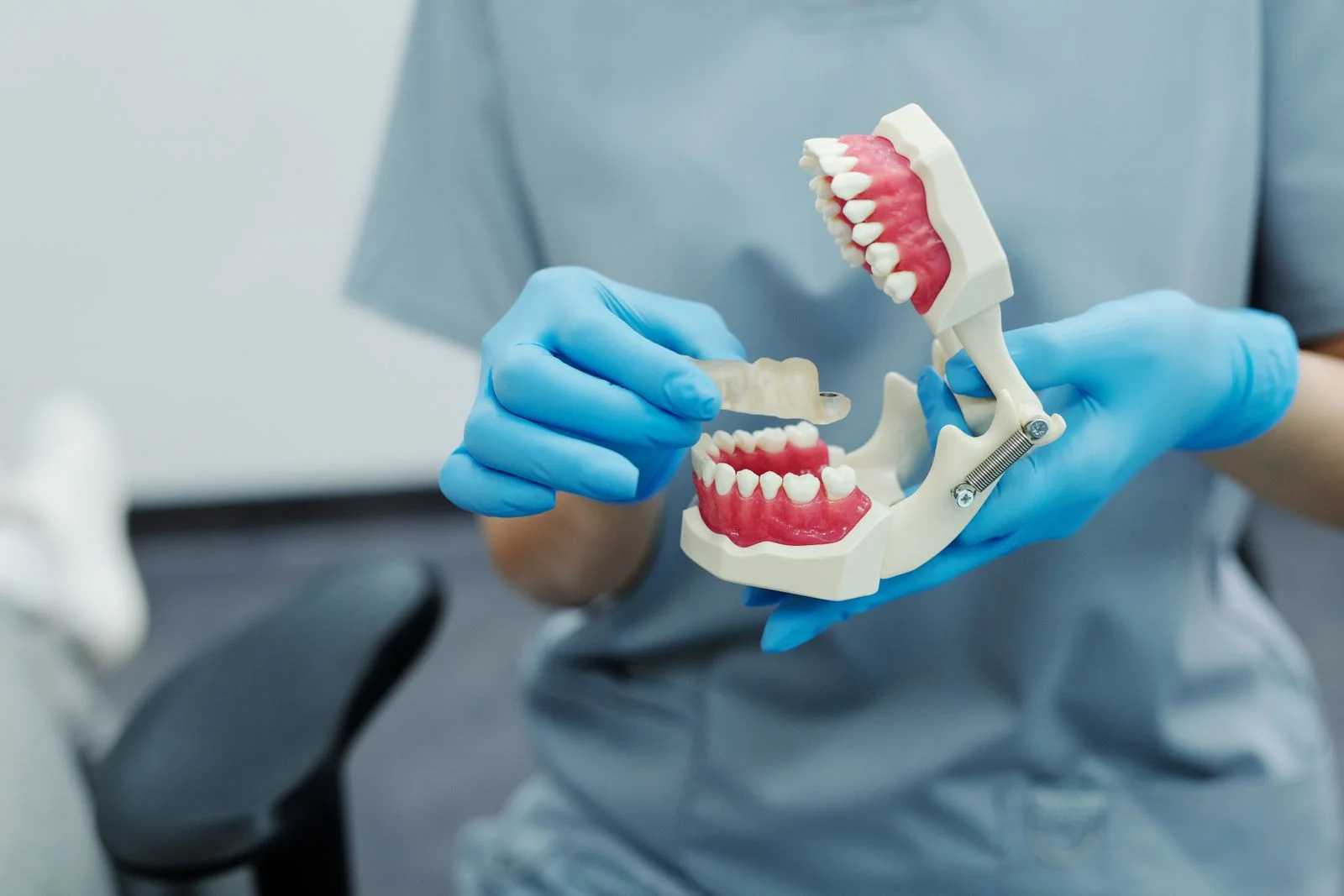
Stock photograph for illustration; not a participating clinic, practitioner, patient or treatment result. Photo: Cedric Fauntleroy / Pexels.
What happens during a dental implant assessment and why imaging is involved
If you are exploring dental implants in Adelaide, one of the first things your treating dentist will arrange is an assessment that may include dental imaging. Imaging helps the clinician evaluate the jaw bone, surrounding teeth and soft tissue before any treatment plan is discussed. This guide explains what that process generally involves and suggests questions worth raising at your consultation — clinical decisions remain entirely with your registered treating practitioner.
Why imaging is part of the implant process
A dental implant replaces a missing tooth root and may be used to support a crown, bridge or denture, depending on the clinical situation. Because the implant is placed into the jaw bone, the treating clinician needs to understand the bone’s dimensions, density and position relative to nerves and sinuses before proposing any treatment plan. That is why imaging is typically discussed at an early appointment rather than being left until later.
The Australian Dental Association dental X-rays resource describes cone beam computed tomography (CBCT) as creating a three-dimensional image of teeth, jaws and parts of the face. Ask your practitioner which imaging is appropriate, what question it is intended to answer and how the findings will be explained. This website does not interpret scans or determine which test you need.
Who requests and interprets the scan
Your treating dentist or specialist (such as a periodontist or oral and maxillofacial surgeon) will request relevant imaging and interpret the findings in the context of your overall health history. They will also ask about existing health conditions and any medicines you take, because both can influence treatment planning. This is a standard part of the assessment process described by healthdirect Australia for dental implant procedures.
If you are referred to a specialist, ask your general dentist whether they will continue to coordinate your care or whether the specialist practice handles that communication directly. Knowing who your primary point of contact is can reduce confusion if questions arise between appointments.
To confirm that any practitioner you consult holds current dental registration, you can search the public register maintained by the Australian Health Practitioner Regulation Agency (Ahpra). Search by the individual practitioner’s name rather than the business name alone.
Questions worth preparing before your assessment
Healthdirect Australia recommends writing down questions before a health appointment and asking for explanations in plain language. The Therapeutic Goods Administration’s consumer resource for medical implants similarly encourages patients to ask about alternatives, potential risks and expected costs before proceeding. The following questions are drawn from those general frameworks and adapted to the implant assessment context:
- What type of imaging do you recommend and why? Understanding whether a standard X-ray or a CBCT scan is proposed — and what information each provides — helps you follow the conversation about findings.
- What will the scan show that you cannot assess visually? This invites the clinician to explain what they are looking for in terms of bone structure and anatomy.
- Are there any findings that might change the treatment options available to me? For example, insufficient bone volume may lead to a discussion of bone grafting as a preliminary step — though whether that applies to you is a clinical question.
- What alternatives exist? Healthdirect notes that alternatives to implants include removable dentures and bridges supported by neighbouring teeth. Asking this question at the assessment stage ensures you have the full picture before deciding.
- How many appointments are involved and what happens at each one? The implant process typically involves more than one appointment; understanding the sequence helps you plan.
- Can you explain the written quote in full before I commit to anything? Healthdirect specifically advises patients to ask the dental professional to explain the whole quotation. See our related guide on dental implant cost and written quote questions for more detail on this area.
A hypothetical scenario to illustrate the process
The following is a hypothetical example for illustration only — it is not a real patient story or an outcome claim.
Imagine someone attending an initial implant assessment after losing a molar. They arrive with a written list of questions but have not brought their current medication list. The dentist asks about health conditions and medicines during the appointment, which prompts the patient to mention a blood-thinning medication they nearly forgot. That detail becomes relevant to the treatment plan. The scenario illustrates why preparing both questions and a current medication list before attending can make an assessment more productive.
Understanding what the assessment does and does not confirm
An assessment appointment does not automatically commit you to treatment. It is an information-gathering stage for both you and the clinician. The dentist uses it to understand whether implant treatment is clinically appropriate for your situation; you use it to understand whether the proposed approach suits your needs, timeline and budget.
For broader context on what a consultation typically covers, see our guide on what dental implants are and what a consultation establishes. If you want to understand the components that may be discussed during assessment, the guide on dental implant components explained for a consultation covers terminology that often comes up.
Preparing for single-tooth versus multiple-tooth assessments
The number of missing teeth influences what an assessment needs to cover. A single missing tooth and a full arch of missing teeth involve different imaging requirements, different component discussions and different treatment sequencing conversations. If you are exploring options for more than one tooth, the single tooth implant consultation preparation guide and the multiple tooth consultation guide may both be useful starting points.
For Adelaide residents ready to take the next step, you can submit a consultation enquiry through the relevant service page — Single Tooth Implant Enquiries, Multiple Tooth Implant Enquiries or Full Arch Implant Enquiries — and a participating local practice will be in contact to arrange an appointment.
Further reading
- healthdirect Australia — Dental implant overview: https://www.healthdirect.gov.au/procedures/dental-procedures-and-appliances/dental-implant
- healthdirect Australia — Questions to ask your doctor: https://www.healthdirect.gov.au/healthcare-and-services/general-health/questions-to-ask-your-doctor
- Therapeutic Goods Administration — Five questions to ask about a medical implant: https://www.tga.gov.au/resources/explore-topic/cosmetics/five-questions-ask-your-health-professional-you-get-medical-implant
- Ahpra practitioner register: https://www.ahpra.gov.au/Registration/Registers-of-Practitioners/Professions-and-Divisions.aspx
Sources and further reading
- healthdirect Australia — dental implant
- Therapeutic Goods Administration — five questions ask your health professional you get medical implant
- healthdirect Australia — questions to ask your doctor
- Ahpra practitioner information — Professions and Divisions.aspx
- Dental X-rays — Australian Dental Association
Source links provide background, not an endorsement or clinical review of this page. Read our editorial approach.